Navigating Workforce Strategy and Risk with Confidence
Businesses that treat their workforce as a strategic asset rather than a purely operational cost are far better positioned to anticipate challenges and seize opportunities.
3/11/20263 min read
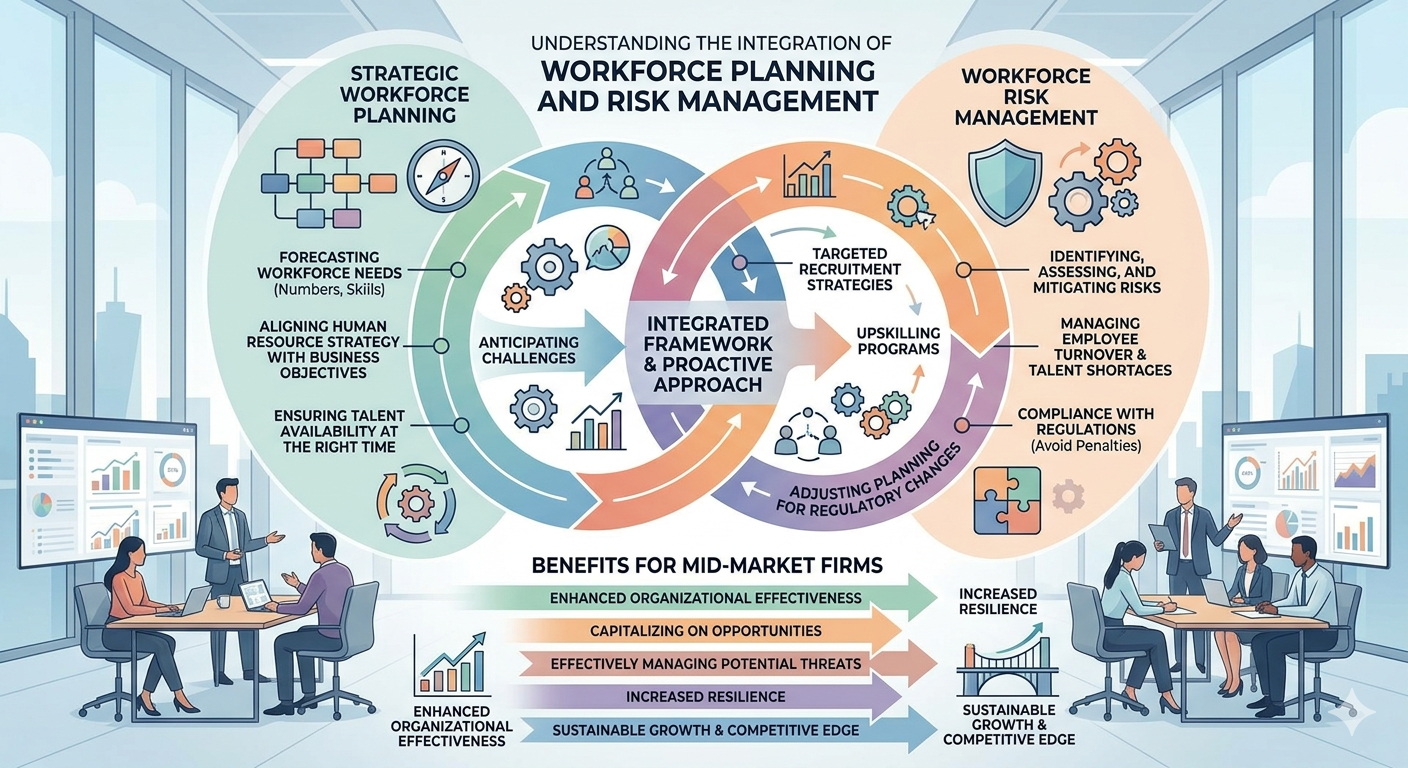
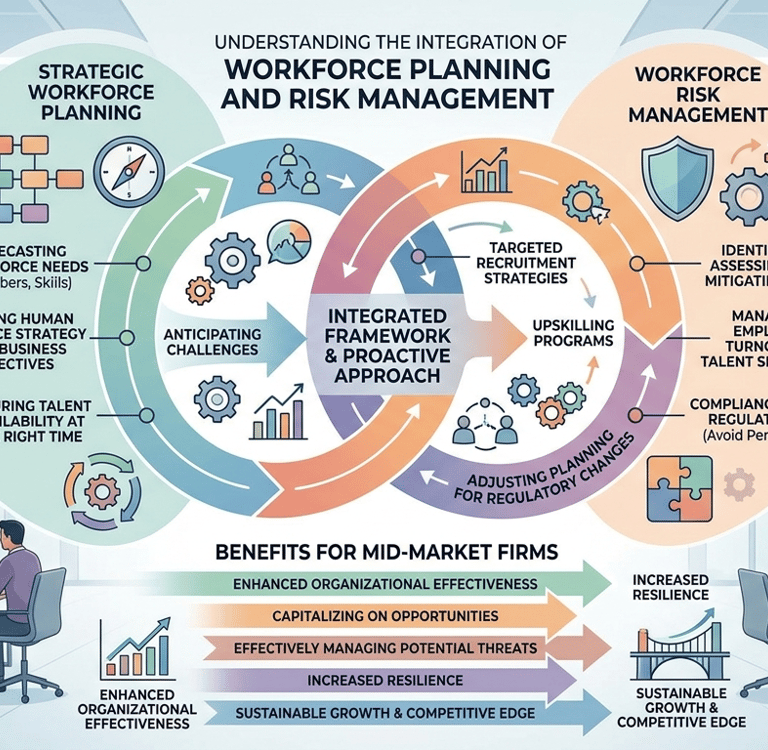
Modern organizations operate in an environment defined by rapid technological change, evolving workforce expectations, and constant economic uncertainty. In this context, workforce decisions can no longer be made in isolation. Strategic workforce planning and workforce risk management must work together to ensure organizations remain resilient, competitive, and prepared for the future.
Businesses that treat their workforce as a strategic asset rather than a purely operational cost are far better positioned to anticipate challenges and seize opportunities. By combining a clear workforce strategy with proactive risk awareness, leaders can build organizations that adapt quickly and grow sustainably.
The Strategic Importance of Workforce Planning
Strategic workforce planning focuses on ensuring that an organization has the right people, with the right skills, in the right roles, at the right time. It aligns workforce capabilities with long-term business objectives and enables leaders to prepare for future talent requirements.
This process typically involves:
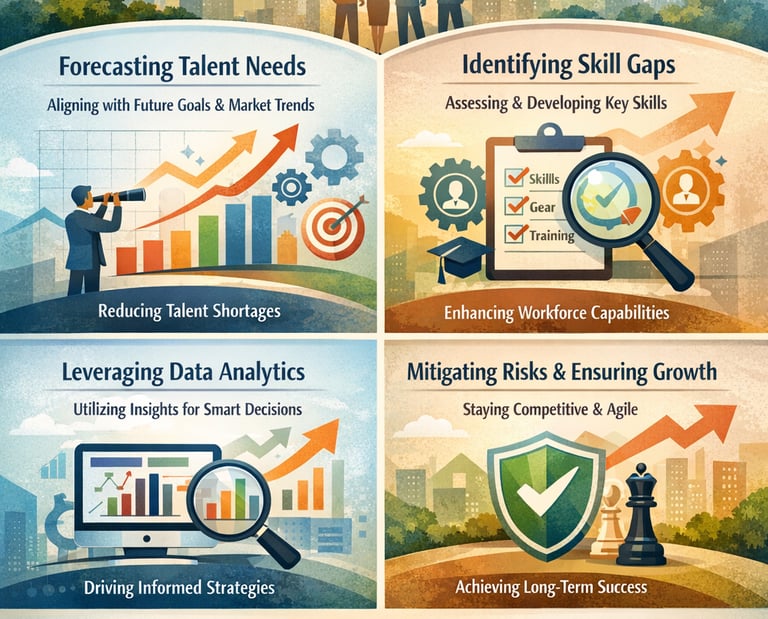
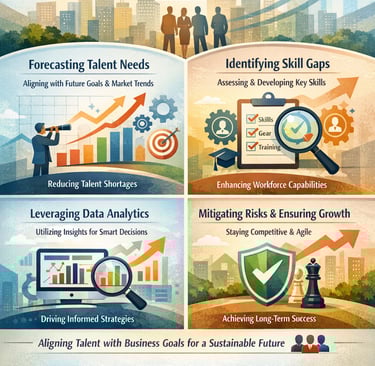
Forecasting future talent and skill requirements
Assessing current workforce capabilities
Identifying gaps between existing capacity and future needs
Developing recruitment, training, and retention strategies
Organizations increasingly rely on workforce planning to navigate uncertain markets. A global study found that skills gaps are one of the most significant barriers to business transformation, highlighting the growing importance of workforce planning in shaping organizational strategy.
When implemented effectively, workforce planning allows organizations to shift from reactive hiring decisions to proactive talent strategies that support long-term growth.


Why Workforce Strategy and Risk Must Work Together
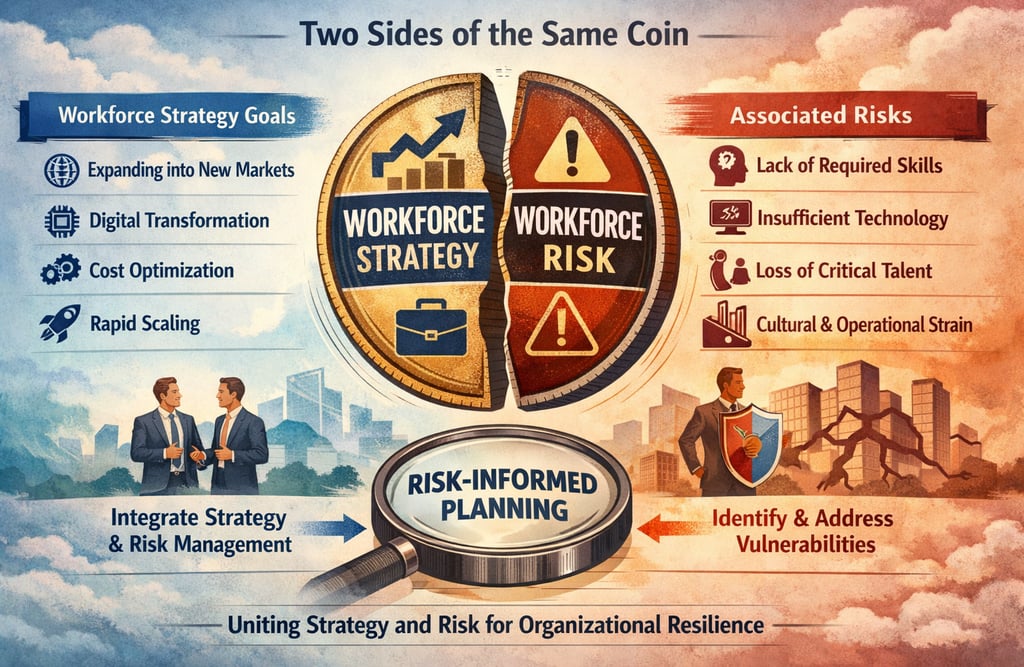
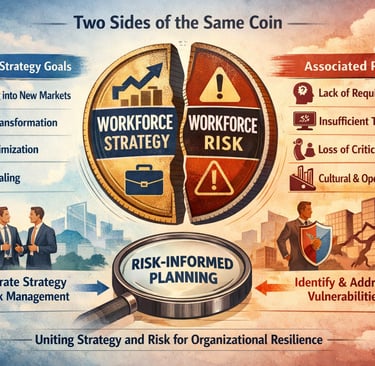
Workforce strategy and workforce risk are two sides of the same coin. Planning the future workforce without understanding the associated risks can create blind spots that undermine organizational resilience.
Organizations must therefore view workforce planning through a risk-informed lens. By integrating strategy and risk management, leaders gain a clearer understanding of where vulnerabilities exist and how to address them proactively.
Key Workforce Risks Organizations Must Address
Several workforce risks are becoming increasingly prominent across industries.
Skills and Talent Shortages
Many organizations struggle to find the talent required to support evolving technologies and business models. Workforce shortages are increasingly viewed as a significant global business risk because they affect innovation, productivity, and competitiveness.
Loss of Institutional Knowledge
When key employees leave without proper knowledge transfer, organizations can lose critical operational expertise. This creates operational vulnerability and reduces efficiency.
Regulatory and Compliance Risks
Workforce-related laws, labor regulations, and governance standards continue to evolve. Organizations must ensure that workforce practices remain compliant across jurisdictions.
Cultural and Engagement Risks
Employee engagement, workplace culture, and leadership practices can influence productivity, retention, and brand reputation.
Building a Resilient Workforce Strategy
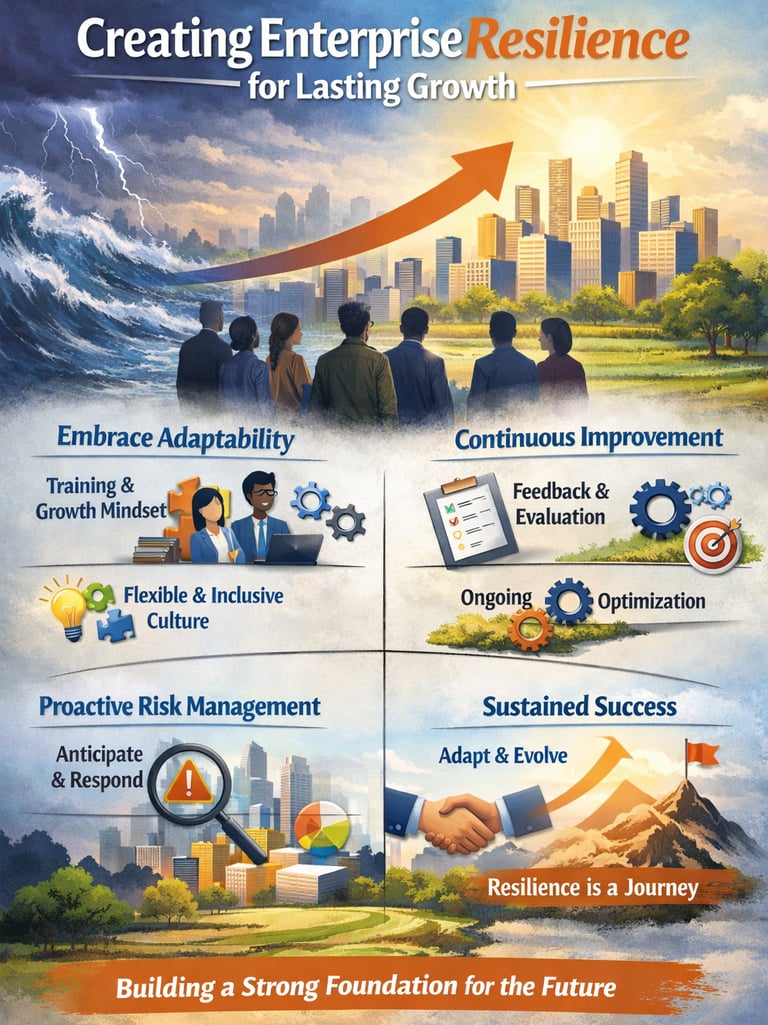
A resilient workforce strategy integrates planning, analytics, and risk management to create a workforce capable of adapting to change.
Key practices include:
1. Workforce Analytics and Data-Driven Insights
Using data allows organizations to anticipate workforce trends, identify emerging risks, and make informed decisions.
2. Skills Development and Future Capability Building
Continuous learning and upskilling help organizations stay competitive and reduce dependency on external talent markets.
3. Succession and Knowledge Transfer Planning
Structured succession planning ensures that critical roles remain filled and knowledge is retained within the organization.
4. Organizational Agility
Flexible workforce structures, cross-functional skills, and adaptive leadership enable organizations to respond quickly to disruption.
Turning Workforce Insight into Strategic Advantage
Organizations that integrate workforce strategy with risk awareness gain a powerful advantage. Instead of reacting to workforce disruptions, they build systems that anticipate and mitigate them.
This integrated approach allows leaders to:
Identify workforce vulnerabilities early
Align talent strategies with long-term business goals
Improve operational resilience
Enhance organizational performance
In an increasingly uncertain world, the ability to navigate workforce strategy and risk simultaneously is becoming a defining capability of successful organizations.
Conclusion
Workforce strategy and workforce risk management are no longer separate disciplines. Together, they form the foundation of organizational resilience and sustainable growth.
Organizations that embrace this integrated approach gain clarity about their workforce challenges and confidence in their ability to navigate the future.
The organizations that succeed in the years ahead will be those that treat their workforce not simply as a resource, but as a strategic system that must be planned, protected, and continuously developed.
Stay Updated
Get insights on workforce strategy and risk
Contact
Let's connect and discuss your workforce needs.
Phone
roland@roftbusiness.org
+27714711799
© 2026. All rights reserved.
Keep CONNECTED